CME License Renewal Requirements by State: Credits & Deadlines
CME license renewal requirements vary by state, from Alabama’s 25 hours each calendar year to Illinois’s 150 hours over three years. Use the state comparison below to find credit totals, required subjects, and renewal timing, then review the answers on accepted credits, missed deadlines, and reporting.
State medical boards implement varying standards for physician renewal. This guide covers selected states and ordinary active-license cycles; MD-only rows are labeled. First renewals, exemptions, reinstatement, and DO-specific rules can change the requirements for an individual license.
Requirements reviewed: October 10, 2026.
CME License Renewal Requirements by State: Hours, Cycles & Deadlines
The CME earning period and the license renewal cycle are not always identical. Connecticut renews annually using 50 hours from the preceding 24 months; North Carolina renews annually with a three-year CME cycle. Topic notes below highlight key requirements rather than listing every exception or specialty-specific obligation.
| State and license | CME hours | CME earning period | Key credit, topic, or deadline details |
|---|---|---|---|
| Alabama (MD/DO) | 25 | Each calendar year | AMA Category 1, AOA Category 1-A, or an accepted equivalent; earn hours January–December. |
| Alaska (MD/DO) | 50 | 2 years | Average 25 hours per year; 2 opioid/pain hours for DEA registrants. License renewal: December 31 of even years. |
| Arizona (MD/DO) | 40 | 2 years | DOs need at least 24 AOA Category 1-A hours; MD and DO credit rules differ. |
| California (MD) | 50 | 2 years | Approved Category 1 credit or a recognized alternative; a separate one-time pain-management requirement applies. |
| Colorado (MD/DO) | 30 | 24 months | First regular renewal subject to the new CME total: April 30, 2027. |
| Connecticut (MD/DO) | 50 | Prior 24 months | License renewal is annual; six specified subjects recur every 6 years after the first CME-required renewal. |
| Delaware (MD/DO) | 40 | 2 years | Active controlled-substance registration holders need 2 controlled-substance hours per biennium. |
| District of Columbia (MD/DO) | 50 | 2 years | 2 LGBTQ cultural-competency hours, 5 public-health-priority hours, and a pharmacology course; birth-month renewal timing. |
| Florida (MD) | 40 | 2 years | Medical errors plus applicable prescribing and periodic topics. Group 1: January 31, even years; Group 2: January 31, odd years. |
| Illinois (MD/DO) | 150 | 3 years | At least 60 formal hours. The 2026 renewal extension ended August 31; next regular renewal: July 31, 2029. |
| Indiana (MD/DO) | No general total | Not applicable | The former 2-hour opioid requirement for controlled-substance registration expired July 1, 2025. Federal DEA rules remain separate. |
| Iowa (permanent/admin physician licenses) | 40 | 2 years | Up to 20 excess Category 1 hours can carry forward; special-license rules differ. |
| Michigan (MD) | 150 | 3 years | At least 75 Category 1 hours; MD and DO rules are separate. |
| Montana (MD/DO) | No general total | Not applicable | Federal DEA and employer or credentialing obligations remain separate. |
| Nebraska (MD/DO) | 50 | 24 months | Up to 25 hours above the required 50 can carry into the following renewal period. |
| New Hampshire (MD/DO) | 100 | 2 years | At least 40 AMA PRA Category 1 hours. |
| North Carolina (MD/DO) | 60 | 3 years | Annual license renewal is separate from the three-year CME period. |
| North Dakota (MD/DO) | 40 | 2 years | Board-approved CME; the current rule uses a two-year period. |
| Ohio (MD/DO) | 50 | 2-year registration period | Includes 1 Board-approved hour on the duty to report misconduct. |
| Pennsylvania (unrestricted MD) | 100 | 2 years | At least 20 Category 1 hours; patient safety and mandated topics also apply. Regular renewal: December 31 of even years. |
| South Dakota (MD/DO) | No general total | Not applicable | Federal DEA and employer or credentialing obligations remain separate. |
| Texas (MD/DO) | 48 | 24 months | At least 24 formal hours, including 2 in medical ethics or professional responsibility; other targeted training can apply. |
For a broader comparison, the Federation of State Medical Boards compiles State CME requirements. Use the current board instructions for your license type and renewal period when applying a summary to your own renewal.
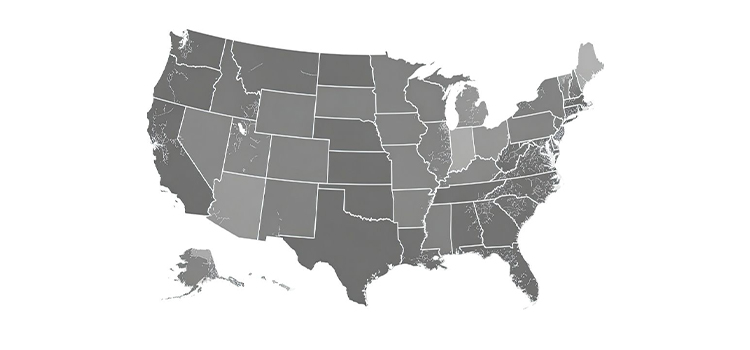
State-Mandated CME Topics: Opioid Prescribing, Ethics, and Other Required Courses by Jurisdiction

Required topics count within the total only as the board permits. Separate one-time courses, recurring subjects, and requirements tied to prescribing authority or the patients you treat.
Florida CME requirements for MD license renewal
Florida MDs need 40 hours for a regular two-year renewal. Required subjects include 2 hours on prevention of medical errors that meet Florida’s content and approval standards. DEA-registered MDs also need 2 hours of Board-approved education on safe and effective controlled-substance prescribing each renewal.
HIV/AIDS education is 1 hour by the first renewal; domestic-violence education is 2 hours every third biennium. First-renewal exemptions change the usual 40-hour total. Group 2’s next regular deadline is January 31, 2027; Group 1’s is January 31, 2028.
California CME requirements for MD license renewal
California MDs need 50 approved CME hours every two years, subject to recognized alternatives and exemptions. The separate one-time requirement is 12 hours on pain management and appropriate treatment of terminally ill patients by the second renewal or within four years, whichever comes first. The board provides exemptions and an alternative qualifying pathway. Keep CME records for at least four years.
Texas CME requirements for physician license renewal
Texas requires 48 hours every 24 months, including at least 24 formal hours. At least 2 formal hours must cover medical ethics or professional responsibility. Required topic courses and any practice-specific training must satisfy the Texas rules; reaching 48 total hours alone does not establish topic compliance.
Ohio CME requirements for physician license renewal
Ohio requires 50 hours each two-year registration period, including 1 Board-approved hour on the duty to report misconduct. The current requirement is 50 hours, not the older 100-hour total that still appears in some summaries. Physicians who have not completed the required hours are ineligible for renewal or reinstatement until they do so.
Pennsylvania CME requirements for unrestricted MD licenses
Pennsylvania MDs need 100 hours per biennium, including at least 20 AMA PRA Category 1 hours. Required subjects include 12 hours of patient safety or risk management, 2 approved child-abuse hours, and 2 opioid/pain/addiction hours for applicable prescribers or dispensers. The required child-abuse and opioid hours cannot also satisfy the 12-hour patient-safety minimum.
Effective May 1, 2026, a one-time 2-hour organ-and-tissue-donation course is due within five years of initial licensure or renewal, whichever comes first. This is not an automatic December 2026 deadline for every physician. The regular MD renewal is December 31 of even-numbered years; DO rules are separate.
Illinois CME requirements and renewal deadlines
Illinois requires 150 hours over three years, including at least 60 formal hours. The 2026 renewal process was extended from July 31 to August 31, 2026. That extension has ended; the next regular renewal is July 31, 2029. A renewal-submission extension does not by itself establish a new CME earning period.
- Each applicable renewal: 1 hour of sexual-harassment-prevention training and 1 hour of implicit-bias training.
- Cultural competency: 1 hour before the first CME-required renewal on or after January 1, 2025, then every 6 years.
- Dementia: 1 hour every 6 years for covered professionals who interact with patients age 26 or older; initial completion rules apply to new licensees.
- Maternal health: from July 1, 2026, providers who report prenatal or postnatal care must take implicit-bias training that includes maternal-health risk factors.
- Safe opioid prescribing: state law sets a 1-hour requirement for licensed controlled-substance prescribers. The Illinois State Medical Society describes a 6-year interval for physicians; use IDFPR’s renewal instructions to determine whether prior training satisfies the attestation for your cycle.
Colorado CME requirements starting with the 2027 renewal
Colorado requires 30 CME hours per 24-month period, with the first regular renewal subject to the total on April 30, 2027. The law applies to renewals, reinstatements, and reactivations on or after January 1, 2026; that effective date is distinct from the first regular renewal deadline. The DORA notice explains the change for Colorado licensees.
Connecticut CME requirements and annual renewal
Connecticut renews physician licenses annually and requires 50 CME hours from the preceding 24 months. The initial license renewal is exempt. At the first renewal requiring CME and every 6 years afterward, complete at least 1 hour each in infectious diseases, risk management, sexual assault, domestic violence, cultural competency, and behavioral health.
DC and Delaware required CME topics
DC’s ordinary full-cycle requirement is 50 hours every two years, including 2 LGBTQ cultural-competency hours, 5 public-health-priority hours, and at least one pharmacology course. DC uses birth-month-based renewal dates; transitional periods can be prorated. The expiration displayed on the license controls the individual deadline.
Delaware requires 40 hours every two years. Active Controlled Substance Registration holders need 2 hours of controlled-substance education each biennium. That prescribing requirement should not be confused with DC’s LGBTQ cultural-competency mandate.
Michigan and North Dakota CME credit totals
Michigan MDs need 150 hours over three years, including at least 75 Category 1 hours. North Dakota requires 40 Board-approved hours every two years; its current rule is not a three-year CME cycle.
Category 1 vs Category 2 Credit Requirements: Which States Have Specific Mandates?

AMA PRA Category 1 Credit is designated by an accredited CME provider for an eligible activity. ACCME accredits providers; it is not itself the course provider. AMA PRA Category 2 Credit covers qualifying physician-directed learning not designated for Category 1 credit. AOA Category 1-A and 1-B are separate credit designations, so verify the exact category your board accepts.
A restriction on self-claimed Category 2 credit does not automatically exclude online or self-paced courses: an accredited enduring activity can award AMA PRA Category 1 Credit. Alabama accepts AMA Category 1, AOA Category 1-A, or an accepted equivalent toward its annual requirement. California MDs need 50 approved Category 1 hours per biennium, subject to the board's recognized alternatives and exemptions.
Illinois requires at least 60 formal hours within its 150-hour total. Texas requires at least 24 formal hours within its 48-hour biennium. MD and DO requirements can differ even in the same state: Arizona DOs need at least 24 AOA Category 1-A hours within their 40-hour total. An AMA Category 1 certificate should not be assumed to satisfy that AOA Category 1-A minimum.
Pennsylvania unrestricted MD licenses require 100 CME hours per biennium, including at least 20 AMA PRA Category 1 hours; the remaining hours may be approved Category 1 or Category 2 activities. This is distinct from Pennsylvania's DO rules. New Hampshire requires 100 hours biennially, including at least 40 AMA PRA Category 1 hours.
Documentation requirements differ between categories. Category 1 activities provide formal certificates from accredited providers, including the physician's name, course title, attendance dates, credit hours received, and sponsoring or accrediting agency. Category 2 credit hours are self-designated and claimed by individual physicians for participation in educational activities not designated for AMA PRA Category 1 Credit.
States Without CME Hour Requirements: What You Still Need to Know About Compliance
Indiana, Montana, and South Dakota do not impose a general physician CME-hour total for ordinary renewal. Federal DEA requirements, individual license conditions, and hospital or employer credentialing can still create education obligations.
Indiana CME requirements: the opioid training rule has expired
Indiana’s Professional Licensing Agency states that the former 2-hour opioid-prescribing and opioid-abuse requirement for controlled-substance registration expired July 1, 2025. Applications for initial registration or renewal submitted after that date do not require proof of that training. The separate federal MATE Act qualification still applies to covered DEA registrants.
Colorado is no longer a state without a general CME mandate: its 30-hour requirement first applies to the regular physician renewal in 2027. Reinstatement and reactivation have separate application requirements.
Covered DEA registrants must meet the one-time MATE Act qualification even if their state has no general CME-hour total. Qualifying addiction-medicine certification, qualifying recent education, or eight hours of eligible training can satisfy it. Practitioners registered solely as veterinarians are excluded.
Record any education required for hospital privileges, employment, or professional-liability coverage separately from the medical board’s renewal minimum.
Tracking Multiple State Licenses: Managing Different Renewal Cycles and Deadlines Simultaneously

Track one row per license with its renewal date, CME earning period, total hours, credit-category minimums, required topics, and reporting status. This separates an annual renewal from a longer CME cycle and shows which subjects remain unfinished.
Renewal cycle variations require separate tracking for each license. Alabama uses a calendar-year CME requirement, Illinois a three-year cycle, and Florida MDs a two-year cycle. Florida's Group 1 licenses renew by January 31 in even-numbered years and Group 2 licenses in odd-numbered years. DC now uses birth-month-based renewal dates; check the expiration shown on your own license rather than assuming a universal December 31 deadline.
Pennsylvania MDs need 100 hours per biennium; Ohio requires 50 per registration period. Those totals do not automatically mean 150 separate course hours. A qualifying activity can count toward both licenses when its date, credit designation, subject, and approval meet both boards’ rules.
For each course, record the licenses and requirements it satisfies. An opioid course can count toward more than one state only when its content and approval meet each state’s standards. Keep one-time requirements, such as MATE eligibility and California pain-management training, on the same record so you do not repeat them unnecessarily.
Keep certificates for the longest retention period applicable to your licenses. California requires at least four years of CME records; Connecticut requires at least six years following the year of completion. Record the course date, provider, credit type, hours, and any topic-specific approval so you can show which requirement each activity satisfies.
Common State-Specific CME Mistakes That Can Delay Your License Renewal

The most consequential mistakes involve the wrong credit category, a missing mandated topic, an expired license, or incomplete records.
Do not assume that all learning earns interchangeable credit. Unstructured journal reading or self-claimed Category 2 activity does not by itself meet Alabama's annual requirement for Category 1 or an accepted equivalent. Conversely, a self-paced online activity may qualify if it awards the specific approved credit your board requires.
Meeting the total hours does not replace mandatory topics. Florida MDs need two hours of prevention-of-medical-errors education that satisfies the state's course-content and approval requirements. A generic patient-safety course is not automatically sufficient. Check all topics that apply to your renewal, including first-renewal exceptions.
California requires at least four years of CME records. Under section 1338 of title 16 of the California Code of Regulations, misrepresenting CME compliance is unprofessional conduct. Retain certificates even when a provider reports your completion electronically.
Before enrolling, read the provider's accreditation statement and the activity's credit designation. The AMA credit system and state-board acceptance rules are related but distinct. Confirm required topic approval, eligible formats, and any credit limits with your licensing board.
Carryover is different from earning credits early within the same cycle. Iowa permits up to 20 excess Category 1 hours for qualifying permanent or administrative licenses; Nebraska permits up to 25 hours above its 50-hour requirement. An allowance in either state does not establish a carryover allowance in Arizona or another jurisdiction.
Federal vs State CME Requirements: Understanding MATE Act and National Mandates

The Medication Access and Training Expansion (MATE) Act establishes a one-time qualification for covered DEA registrants, excluding practitioners registered solely as veterinarians. It is separate from recurring state CME obligations.
DEA recognizes three pathways: qualifying addiction-medicine or addiction-psychiatry board certification; qualifying graduation within the preceding five years with the required curriculum; or eight hours of eligible training from an authorized organization. The training pathway may combine multiple qualifying activities. A new eight-hour course is not required for everyone.
The attestation applies at the first DEA initial registration or renewal on or after June 27, 2023. Once it is satisfied, it does not become a new eight-hour requirement at every DEA renewal.
Previously completed qualifying training can count, including eligible past DATA-waiver training. Keep records of the pathway or training used to satisfy the requirement.
A course used for MATE may also satisfy state CME only when it meets that state's credit, topic, approval, and completion-date rules. Federal eligibility does not automatically establish state acceptance.
Track DEA registration separately from each state license and controlled-substance registration. Their renewal dates and educational obligations can differ.
Need training for the eight-hour pathway? Explore GetMyCME’s 8-hour MATE training course. The course page provides the credit statement and eligibility details for planning your training.
How to Verify Your State's Current CME Requirements Before Each Renewal Period

Use your medical board’s current renewal instructions, governing rules, and your licensing account together. A comparison chart helps you plan; the board determines the requirement for a first renewal, exemption, unusual license status, or changed deadline.
- Record two dates: the deadline for earning CME and the deadline for submitting renewal.
- Match the license: distinguish MD from DO rules and record prescribing or practice-specific obligations.
- Match the activity: compare its credit designation, topic approval, and completion date with the requirement.
- Reconcile the record: retain certificates and resolve missing reported credits before submitting a truthful attestation.
Recent amendments and temporary extensions can outdate a summary. For unresolved exemptions or conflicting instructions, contact the board with the exact license type, renewal period, and rule in question.
Planning for Colorado’s April 2027 renewal? Explore the existing Colorado provider renewal package and its listed courses and credits to build your renewal plan.
Frequently Asked Questions About State CME License Renewal Requirements
Do I need to complete CME requirements if I'm not actively seeing patients?
An active license can carry a CME obligation even when you are not seeing patients. Stopping clinical work does not automatically change license status or create an exemption. Use the board’s active, inactive, retired, or exempt category that applies to your situation; obtain any required exemption before claiming it.
Can I use the same CME credits toward multiple state license renewals?
Often, yes. The same activity can count for multiple licenses if it meets each board's credit, topic, approval, and completion-period rules. Retain one certificate with a record of where you claimed it. A course accepted toward general hours in one state may not fulfill a specific mandatory topic in another.
Are Category 1 credits accepted for license renewal?
Yes—AMA PRA Category 1 Credit can count toward physician renewal when accepted by the licensing board. For example, Pennsylvania unrestricted MDs need at least 20 Category 1 hours within their 100-hour biennium. The exact designation matters: an AMA Category 1 certificate is not automatically AOA Category 1-A credit, which Arizona DOs need for at least 24 of their 40 hours. Mandatory subject approvals also remain separate.
What happens if I miss my CME renewal deadline?
Missing required CME can prevent renewal or interrupt your authority to practice. The outcome depends on whether you missed the education, reporting, or license-renewal deadline. Specific examples:
- Ohio: a physician without the required CME is ineligible for renewal or reinstatement until the hours are completed. Late-earned hours used for the previous period cannot also count toward the current period.
- Florida MDs: required CME must be reported to the Department’s tracking system before renewal. A delinquent renewal requires the applicable education for both the current and previous cycles.
- Colorado: the CME law provides for inactive status when a licensee fails the requirements or required audit evidence, until the Board reinstates the license.
- California: an expired physician license does not authorize practice, even during the 30-day period before a delinquency fee applies.
Identify the missing requirement, verify your current license status, and follow the board’s late-renewal or reinstatement process. Never attest to hours you have not completed.
Are online CME courses accepted by all states?
Online courses can count when they award the credit and meet the subject and format rules your board requires. Online delivery alone neither qualifies nor disqualifies a course. An accredited self-paced activity can award AMA PRA Category 1 Credit; that does not automatically satisfy an AOA Category 1-A minimum or a separately approved state topic.
How do I document CME completion for state board audits?
Keep certificates showing your name, course title, completion date, hours, provider, and credit category, together with evidence of required topic approval. California requires at least four years of records; Connecticut requires at least six years following the completion year. For multiple licenses, use the longest applicable retention period and keep a backed-up digital copy.
Does GetMyCME report course completion automatically?
Complete the course requirements and select the license for which you want credit. GetMyCME then reports to CE Broker where supported. Your certificate is available in My Courses and by email. Before renewal, verify that the selected license and completed credits appear correctly in the reporting system; course reporting and license renewal are separate steps.
Can I complete more than the required hours and carry them over to the next renewal period?
Yes, where the board allows carryover. Iowa permits up to 20 excess Category 1 hours for qualifying permanent or administrative licenses. Nebraska permits up to 25 hours above its 50-hour requirement for the following renewal period. These allowances are specific to the stated licenses and limits; another state’s permission does not transfer to your other licenses.
Ready to plan your renewal courses? Browse GetMyCME’s state-specific bundles to find courses grouped by state and review the listed credits and topics. Use your completed-course record to select the training you still need.